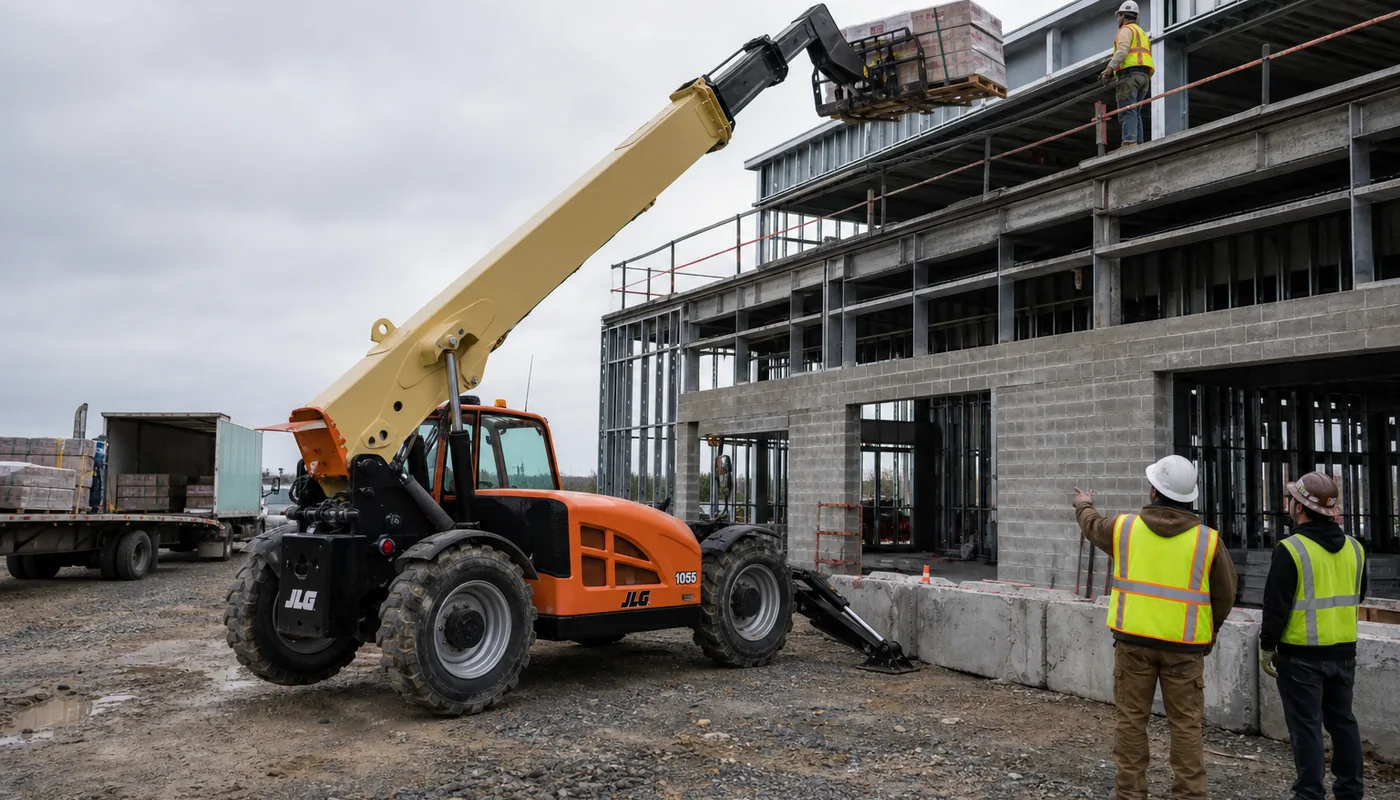
Telehandler names are usually built around impressive numbers: ten thousand pounds, fifty-five feet, four-wheel steer. The job rarely asks for all of those numbers in the same position. Buyers and renters need to know what the machine can carry at the height and forward reach where the load will actually be placed.
Compare current telehandlers for sale or rent and include delivery, attachments and pickup when requesting prices.
JLG 1055, SkyTrak 10054, Genie GTH-1056 and Manitou MTA 1055-class machines are often compared for high-capacity construction work. They are not identical, and specifications can change across years and options. Buyers should compare the load chart, overall dimensions, attachments, visibility, control feel, parts support and transport requirements for the exact unit.
| Model or category | Good starting application | What to verify |
|---|---|---|
| JLG 1055 family | Commercial construction and elevated placement | Load chart, boom wear, tires, attachments and local service |
| SkyTrak 10054 family | General construction and material placement | Condition, carriage, controls, transport and dealer inventory |
| Genie GTH-1056 family | High-reach construction applications | Configuration, load chart, service access and parts coverage |
| Manitou MTA 1055 family | Construction and rough-site material handling | Attachments, operator environment, tires and regional support |
A contractor needs a 10,000 lb-class telehandler on three projects over nine months. The machine will place masonry at height, unload trucks and sit idle between two schedules. A monthly rental looks simple, while buying offers availability and possible resale value.
Practical takeaway: The contractor compares delivered rental months, overtime, damage terms and pickup against financing, insurance, planned maintenance, transport between jobs and expected resale. The result turns on utilization and logistics, not a generic rent-versus-buy rule.

Maximum capacity is usually available in limited positions. The required load at forward reach may demand a larger machine than the headline rating suggests.
Fork carriage width, side tilt, buckets and specialty attachments change capability, cost and sometimes capacity.
Pins, wear pads, hoses, chains, axles, steering modes, brakes and fault history deserve a professional inspection.
Machine weight and dimensions affect trailer, permits, delivery price and the practicality of moving between jobs.
Hour allowances, damage waiver, fuel, cleaning, tires, attachments, delivery and pickup can materially change the invoice.
A useful quote should identify the exact model and year, rated capacity at the required lift height and load center, mast and lowered height, tires, power source, attachments, operating hours or battery details, warranty, delivery, setup, training assumptions and the final delivered price. If two proposals do not describe the same machine and support scope, the lower number is not automatically the better buy.
Use the telehandler quote form to compare the same capacity, reach, attachment and delivered scope.
New and used prices vary widely by capacity, reach, brand, year, hours, condition, attachments and market. Request current delivered quotes for the required class.
Renting often fits short or uncertain use; buying can work for steady utilization and organizations prepared for transport, maintenance and resale. Compare total term cost.
Size from the load chart at the required height and forward reach, then confirm ground, access, attachment and transport constraints.
Review boom wear, pins, wear pads, hydraulics, tires, steering, brakes, drivetrain, load-management systems, hours, service history and active faults.


October 12,2026


September 28,2026

September 25,2026

September 22,2026
The largest network of forklift dealers in the US and Canada is at your fingertips. Get the best pricing nationwide now on renting or buying a forklift
Get the lowest prices from our forklift dealers near you.
