
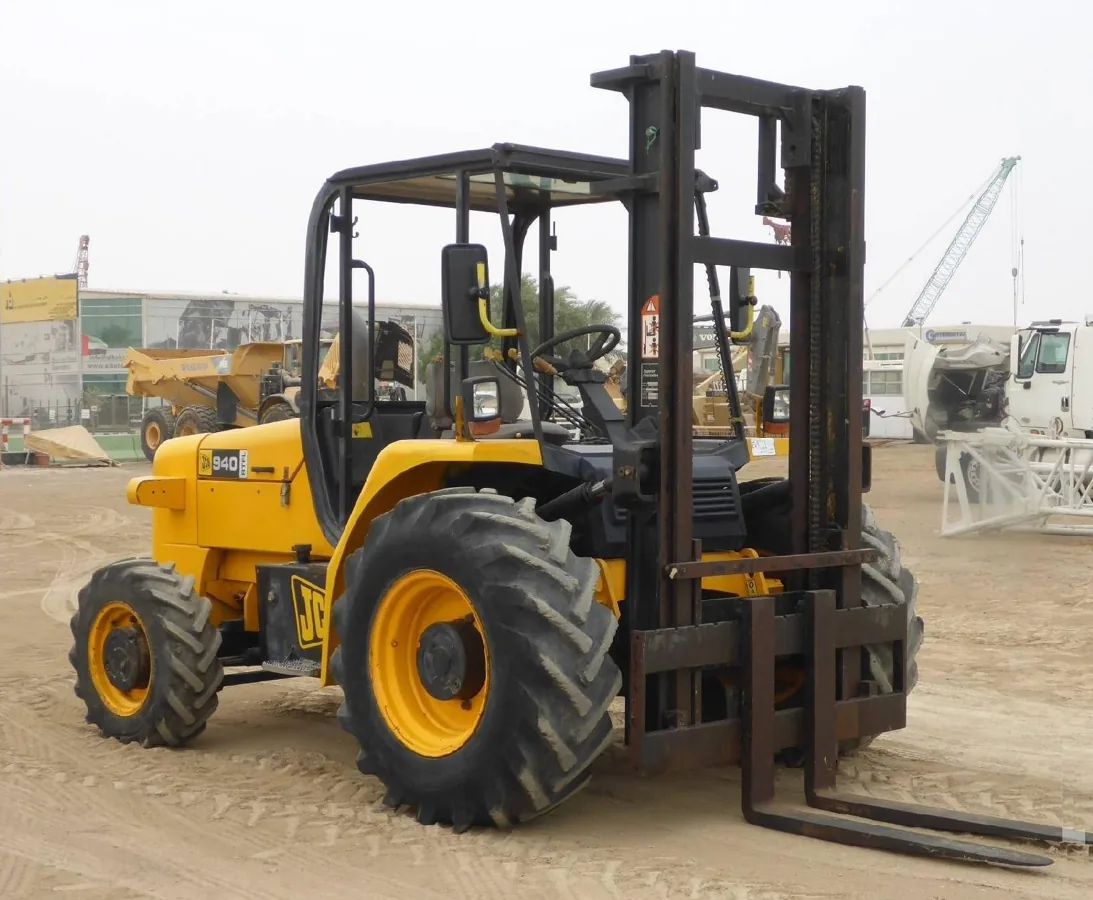
Buying a new or used rough-terrain forklift
Rough-terrain forklifts are built for outdoor material handling on gravel, soil and developing jobsites where warehouse tires and low ground clearance are unsuitable. Tire type, drive system, ground clearance, stability and the load chart must match the surface, slope and lift task.
Before comparing rough-terrain forklifts for sale, rental and lease, document the real load, load center, lift height, aisle or travel route, floor or ground surface, duty cycle and attachments. Those details determine usable capacity and whether the truck can work efficiently in the facility.
Common rough-terrain forklift uses and application fit
- Construction material staging: Move masonry, lumber, forms and packaged materials across improved jobsite routes.
- Lumber and building-supply yards: Handle long or heavy loads with suitable forks, carriage and terrain capability.
- Agricultural and rural work: Move palletized supplies and materials on outdoor operating surfaces.
- Remote project support: Unload deliveries where dock-height infrastructure is unavailable.
Advantages of rough-terrain forklifts
The strongest advantage is application fit. A truck that reduces travel, supports safe visibility, reaches the rack and handles the actual load can create more value than a larger machine with the wrong dimensions or power system.
- Higher ground clearance: The chassis and tires can clear surface irregularities that stop warehouse trucks.
- Outdoor traction: Pneumatic tires and drive configurations support prepared jobsite routes.
- Strong straight-mast handling: The truck can lift vertically while carrying loads across suitable outdoor areas.
- Jobsite-oriented construction: Cooling, guarding and operator visibility are designed around outdoor duty.
Compare rough-terrain forklift types, capacities and configurations
Document the worst operating surface, slope and turning area, then verify load weight, center, lift height and attachment. Compare pneumatic tire construction, four-wheel drive, oscillating axle, ground clearance, mast lowering height and transport weight.
| Forklift configuration | Often fits | Compare before requesting prices |
|---|---|---|
| Two-wheel-drive straight-mast trucks | Improved yards and moderate outdoor surfaces | Tires, clearance, capacity, mast and steering axle |
| Four-wheel-drive rough-terrain trucks | Uneven jobsites and stronger traction needs | Drive system, axle, gradeability, tires and stability |
| Compact rough-terrain units | Restricted outdoor sites and lighter material movement | Width, turning radius, capacity, lift height and transport |
Buy, rent or lease rough-terrain forklifts
Buying can fit steady utilization, controlled maintenance and a long holding period. A rough-terrain forklift rental can cover seasonal demand, a temporary project or an immediate fleet gap. Leasing can create a known term and replacement schedule. Compare all paths with equipment financing options and the complete delivered and operating cost.
Rough-terrain forklift rental is common for construction phases and seasonal outdoor projects. Buying or leasing can fit yards and contractors with recurring loads, known haul routes and maintenance support. Review freight, battery or fuel infrastructure, planned service, tires, attachments, training and end-of-term obligations. The forklift price guide explains how to normalize dealer quotes before choosing.
How to evaluate used rough-terrain forklifts for sale
When reviewing used outdoor forklifts for sale, verify the exact model, serial number, hours, data plate, attachment listing and service history. Condition should be judged against the work the truck must perform, not paint or a short unloaded demonstration.
- Inspect tires, wheels, steering axle, drive axle, differential and four-wheel-drive operation.
- Check mast, chains, rollers, carriage, forks, tilt cylinders and load backrest.
- Test brakes, steering, transmission, hydraulics and cooling under representative conditions.
- Review frame, counterweight, guarding, leaks, hours, service history and the correct load chart.
Request operating videos and detailed photographs when an in-person inspection is not practical. Confirm freight, warranty, charger or fuel equipment, manuals and local support before treating the quote as complete. The online forklift buying checklist covers seller, inspection and delivery questions.
What affects rough-terrain forklift prices?
Rough-terrain forklift prices vary with capacity, drive, mast, hours, tires, axle and transmission condition, attachments, warranty, freight and field service. Delivery distance, dealer inventory and service coverage also affect the complete cost. Browse forklift dealers by state and compare equivalent configurations through the current forklift price form.
Questions to send the forklift dealer
- What usable capacity remains at the required lift height and load center?
- Which mast, tires, power system and attachments are included?
- What inspection, battery, condition, service and warranty documents are available?
- Are freight, charger or fuel equipment, setup and delivery included?
- Who handles parts, planned maintenance and field service near the delivery ZIP?
Rough-terrain forklift FAQs and related buyer resources
How do you choose the right rough-terrain forklift?
Document the worst operating surface, slope and turning area, then verify load weight, center, lift height and attachment. Compare pneumatic tire construction, four-wheel drive, oscillating axle, ground clearance, mast lowering height and transport weight. Verify the final specification on the manufacturer data plate and capacity information for the exact mast, forks and attachment.
Should you buy, rent or lease rough-terrain forklifts?
Rough-terrain forklift rental is common for construction phases and seasonal outdoor projects. Buying or leasing can fit yards and contractors with recurring loads, known haul routes and maintenance support. Compare utilization, cash flow, maintenance responsibility, term and resale or end-of-term options instead of focusing only on the monthly payment.
How should you compare rough-terrain forklift prices?
Rough-terrain forklift prices vary with capacity, drive, mast, hours, tires, axle and transmission condition, attachments, warranty, freight and field service. Put every quote into the same capacity, mast, power, tire and attachment configuration, then review the total cost of owning a forklift.
Continue with the Forklift Buyer’s Guide, browse all forklift types, or review the related equipment and FAQ links below.