
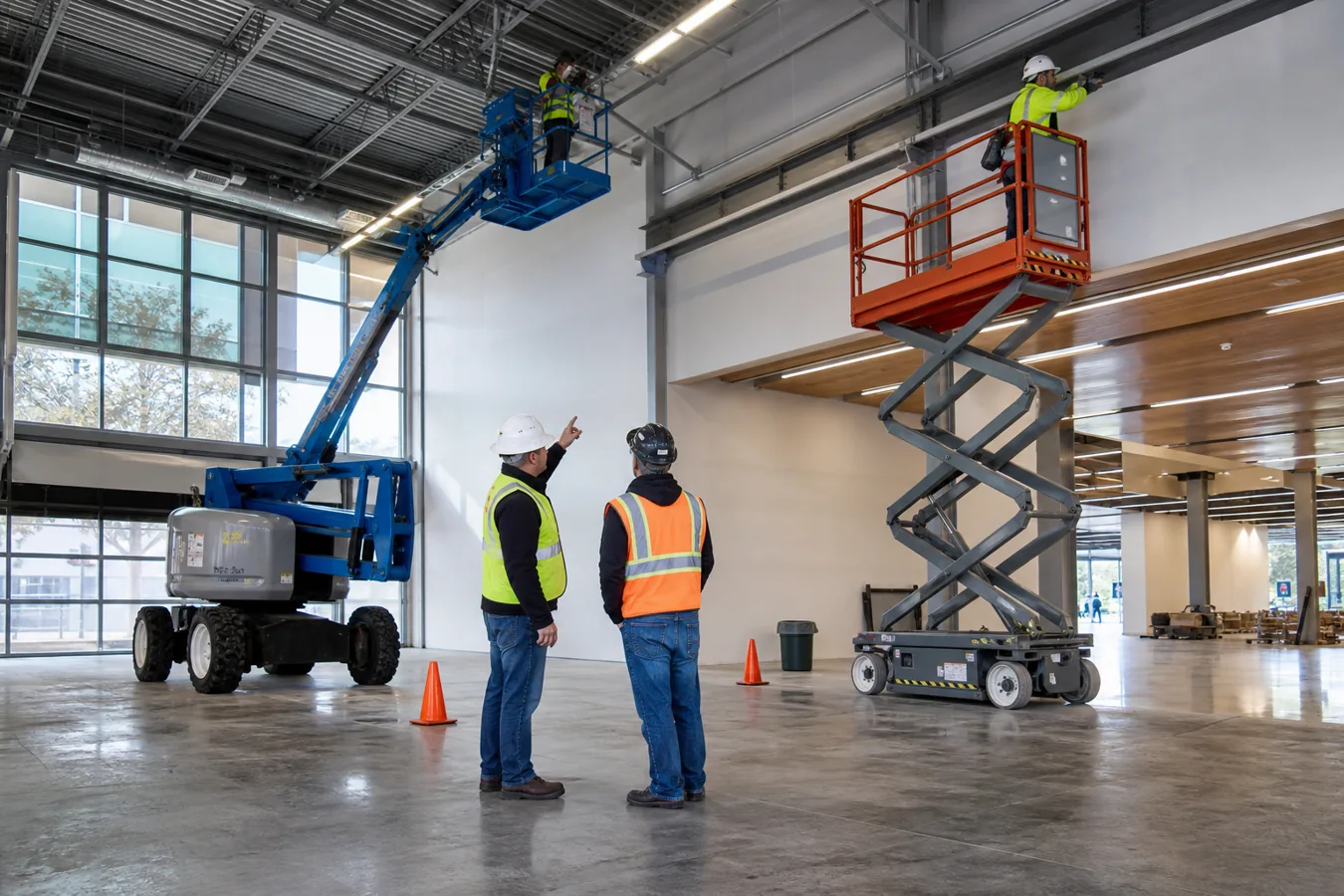
Buying a new or used scissor lift
Scissor lifts provide a large vertical work platform for installation, maintenance and construction tasks. Buyers should compare platform height, deck size, extension deck, total platform capacity, stowed dimensions, drive-at-height capability and floor or ground conditions.
Electric slab scissor lifts favor smooth indoor floors and low on-site emissions. Rough-terrain scissor lifts add larger tires, gradeability, outriggers on some models and engine or hybrid power for developing sites.
Compare new-machine warranty, technology and availability with the purchase price, hours, condition and remaining service life of used scissor lifts. The better value is the machine that can complete the required work at a predictable delivered and operating cost.
Common scissor lift uses, applications and jobsite fit
- Warehouse and facility maintenance: Access lighting, sprinklers, ductwork, signage and overhead systems from a broad platform.
- Electrical and mechanical installation: Carry workers, tools and materials along repetitive elevated work areas.
- Interior construction and finishing: Support framing, ceiling, painting and fit-out work where floor loading and access are suitable.
- Outdoor construction: Use rough-terrain models for cladding, steel, utilities and site tasks within slope and wind limits.
Advantages of scissor lifts for construction and industrial work
The advantages depend on matching the machine to the production plan. Capacity, reach, traction, attachments, access and serviceability should improve the work rather than simply add specifications.
- Large platform area: Deck space can support multiple workers and organized tools within the rated capacity.
- Straight vertical elevation: A scissor mechanism raises the platform without the long tail swing of many boom lifts.
- Electric indoor options: Battery-powered slab machines offer quiet operation and no engine exhaust at the point of use.
- Extension-deck reach: A deck extension can close a limited horizontal gap while staying within the machine rating.
Compare scissor lift sizes, configurations and capabilities
Use platform height rather than working height when matching the deck to the task, and confirm that every entry point can pass the stowed machine. Floor capacity, slope, pothole protection, deck load, extension use, wind rating and charging or fueling access all belong in the comparison.
| Configuration | Often fits | Compare before requesting prices |
|---|---|---|
| Narrow electric slab lifts | Doorway access, warehouses and finished interiors | Stowed width, floor load, battery, charger and pothole protection |
| Wide-deck electric lifts | Larger indoor work areas and more platform capacity | Deck dimensions, extension, turning space, capacity and transport |
| Rough-terrain scissor lifts | Outdoor construction and uneven developing sites | Drive, gradeability, tires, outriggers, power source and ground support |
Scissor Lifts for sale, rental, lease or financing
When comparing scissor lifts for sale, rental and lease, define the project schedule and expected annual hours before choosing an ownership path. Purchase can fit predictable utilization and long holding periods. Rental can keep a specialized machine tied to one project or production phase. Leasing can create a planned replacement cycle, while heavy-equipment financing options may preserve working capital for other parts of the job.
Scissor lift rental is common for fit-outs, shutdowns and projects with a defined height and schedule. Buying or leasing may reduce repeated mobilization for facilities and contractors with steady work, suitable storage and a planned inspection program. Compare the complete delivered cost, including attachments, freight, setup, training, service responsibility and end-of-term obligations. The equipment price comparison guide explains why a headline price alone is not a complete quote.
How to inspect used scissor lifts for sale
A used-equipment inspection should connect wear to expected production and repair cost. Confirm the exact model, product identification or serial number, hours, ownership history and service records before relying on photos or a general condition statement.
- Inspect scissor arms, pins, rollers, slide blocks, welds, cylinders and platform extension structure.
- Test upper and lower controls, emergency lowering, alarms, tilt sensor and pothole-protection system.
- Check batteries, charger, cables, hydraulic leaks, tires, brakes, steering and drive at permitted heights.
- Confirm manuals, decals, inspection records, platform gate and rated-capacity markings are complete.
Ask for cold-start and operating videos, fluid information, fault codes and close photographs when an in-person inspection is not available. Confirm who is responsible for loading, permits, freight, unloading and any damage found at delivery. Review what to verify when buying equipment online before sending payment.
What affects scissor lift prices?
Scissor lift prices reflect platform height, deck capacity, narrow or wide chassis, electric or engine power, rough-terrain package, hours, batteries, tires, inspection history, freight and service availability. Location also matters because transport, dealer inventory and field-service coverage vary. Use the equipment dealer location pages to plan delivery and support, then compare equivalent configurations through the current equipment price form.
Questions to ask before accepting a dealer quote
- What exact machine, serial number, hours and configuration are included?
- Which attachments, couplers, technology packages and manuals come with it?
- What inspection, service, warranty or return documentation is provided?
- Are loading, freight, setup and delivery included in the quoted price?
- Who provides parts, field service and technical support near the delivery location?
Scissor lift buyer FAQs and related equipment guides
What size scissor lift should you choose?
Use platform height rather than working height when matching the deck to the task, and confirm that every entry point can pass the stowed machine. Floor capacity, slope, pothole protection, deck load, extension use, wind rating and charging or fueling access all belong in the comparison. Oversizing can increase transport and operating cost, while an undersized machine can create slow cycles, overload risk and avoidable downtime.
Is it better to buy or rent a scissor lift?
Scissor lift rental is common for fit-outs, shutdowns and projects with a defined height and schedule. Buying or leasing may reduce repeated mobilization for facilities and contractors with steady work, suitable storage and a planned inspection program. The better answer comes from utilization, project duration, maintenance capability, transport frequency and the total cost of keeping the machine available.
How should buyers compare scissor lift prices?
Scissor lift prices reflect platform height, deck capacity, narrow or wide chassis, electric or engine power, rough-terrain package, hours, batteries, tires, inspection history, freight and service availability. Put each quote into the same delivered configuration and review the total equipment ownership cost factors before making the final comparison.
Continue through the heavy-equipment buying pages, review more equipment buyer FAQs, or explore the related machine guides below.