
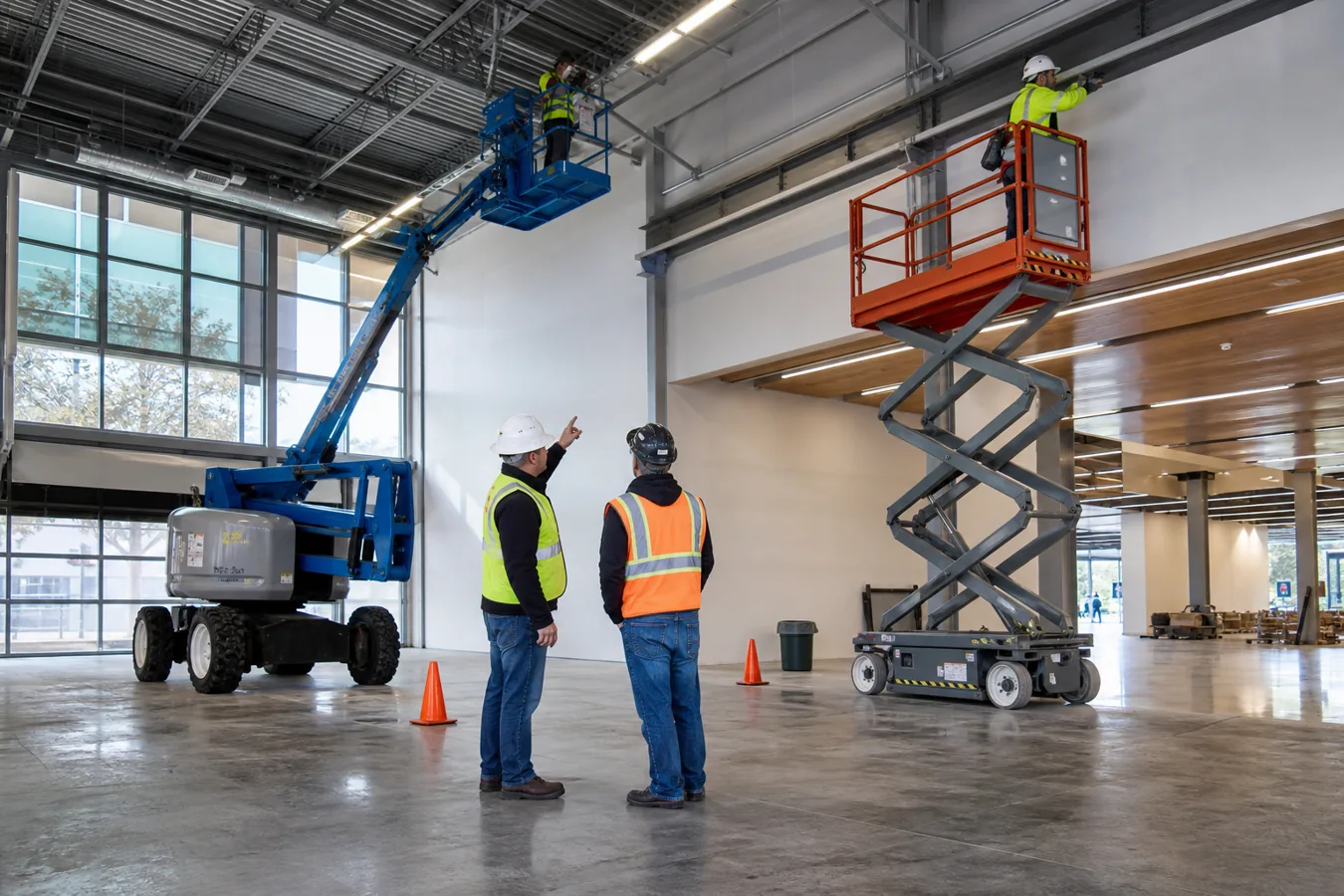
Buying a new or used bucket truck
Bucket trucks combine an aerial device with a road-going chassis for utility, telecommunications, tree care, lighting, sign and municipal work. The complete unit must be evaluated: working height, side reach, boom design, bucket capacity, chassis payload, wheelbase, axle ratings and storage body all affect the job.
Insulated and non-insulated aerial devices serve different applications and require different inspection practices. Buyers must verify the equipment classification, current test records and suitability for the intended work rather than assuming every bucket truck is interchangeable.
Compare new-machine warranty, technology and availability with the purchase price, hours, condition and remaining service life of used bucket trucks. The better value is the machine that can complete the required work at a predictable delivered and operating cost.
Common bucket truck uses, applications and jobsite fit
- Utility line construction and service: Position qualified crews for overhead distribution work with the required insulated-device specification.
- Telecommunications and cable work: Reach poles and strand routes while carrying tools, reels and service equipment on a mobile chassis.
- Tree care and vegetation management: Use forestry configurations with the reach, guarding, chip body or towing setup required by the crew.
- Lighting, signs and municipal maintenance: Move between distributed work orders without separately hauling a self-propelled lift.
Advantages of bucket trucks for construction and industrial work
The advantages depend on matching the machine to the production plan. Capacity, reach, traction, attachments, access and serviceability should improve the work rather than simply add specifications.
- Road mobility: The aerial platform, tools and service body travel together from one field location to the next.
- Useful side reach: Boom geometry can position the bucket away from the chassis when setup and load charts permit.
- Purpose-built bodies: Compartments, outriggers, material handlers and towing equipment can be configured around a trade.
- Specialized aerial-device choices: Telescopic, articulating, over-center and material-handling designs cover distinct access requirements.
Compare bucket truck sizes, configurations and capabilities
Define required working height and side reach with the truck positioned in a realistic setup area. Then verify bucket load, material-handler rating, boom classification, outrigger spread, chassis payload, gross axle weights, body storage, towing needs and legal operating requirements.
| Configuration | Often fits | Compare before requesting prices |
|---|---|---|
| Light-duty service bucket trucks | Lighting, signs, telecom and municipal maintenance | Chassis payload, body storage, working height, side reach and parking access |
| Utility distribution units | Overhead line construction and service | Insulation class, test records, material handler, outriggers and axle ratings |
| Forestry and high-reach units | Tree care, vegetation management and taller access | Boom design, chip or tool body, reach chart, stability and transport height |
Bucket Trucks for sale, rental, lease or financing
When comparing bucket trucks for sale, rental and lease, define the project schedule and expected annual hours before choosing an ownership path. Purchase can fit predictable utilization and long holding periods. Rental can keep a specialized machine tied to one project or production phase. Leasing can create a planned replacement cycle, while heavy-equipment financing options may preserve working capital for other parts of the job.
Bucket truck rental can cover storm response, a temporary contract or a specialized height requirement. Buying or leasing can suit established field fleets that can maintain the chassis and aerial device, complete required inspections and keep the configuration productive. Compare the complete delivered cost, including attachments, freight, setup, training, service responsibility and end-of-term obligations. The equipment price comparison guide explains why a headline price alone is not a complete quote.
How to inspect used bucket trucks for sale
A used-equipment inspection should connect wear to expected production and repair cost. Confirm the exact model, product identification or serial number, hours, ownership history and service records before relying on photos or a general condition statement.
- Verify aerial-device inspection, dielectric testing where applicable and documented maintenance history.
- Inspect boom sections, fiberglass components, wear pads, pins, hoses, cylinders, bucket liner and controls.
- Check outriggers, interlocks, emergency systems, platform load markings and structural mounting points.
- Inspect chassis engine, transmission, brakes, tires, frame, PTO, hydraulic system, body and axle-weight compliance.
Ask for cold-start and operating videos, fluid information, fault codes and close photographs when an in-person inspection is not available. Confirm who is responsible for loading, permits, freight, unloading and any damage found at delivery. Review what to verify when buying equipment online before sending payment.
What affects bucket truck prices?
Bucket truck prices depend on boom type and height, insulation class, material handler, chassis age and mileage, engine and transmission, aerial hours, body condition, test history, outriggers, freight and support. Location also matters because transport, dealer inventory and field-service coverage vary. Use the equipment dealer location pages to plan delivery and support, then compare equivalent configurations through the current equipment price form.
Questions to ask before accepting a dealer quote
- What exact machine, serial number, hours and configuration are included?
- Which attachments, couplers, technology packages and manuals come with it?
- What inspection, service, warranty or return documentation is provided?
- Are loading, freight, setup and delivery included in the quoted price?
- Who provides parts, field service and technical support near the delivery location?
Bucket truck buyer FAQs and related equipment guides
What size bucket truck should you choose?
Define required working height and side reach with the truck positioned in a realistic setup area. Then verify bucket load, material-handler rating, boom classification, outrigger spread, chassis payload, gross axle weights, body storage, towing needs and legal operating requirements. Oversizing can increase transport and operating cost, while an undersized machine can create slow cycles, overload risk and avoidable downtime.
Is it better to buy or rent a bucket truck?
Bucket truck rental can cover storm response, a temporary contract or a specialized height requirement. Buying or leasing can suit established field fleets that can maintain the chassis and aerial device, complete required inspections and keep the configuration productive. The better answer comes from utilization, project duration, maintenance capability, transport frequency and the total cost of keeping the machine available.
How should buyers compare bucket truck prices?
Bucket truck prices depend on boom type and height, insulation class, material handler, chassis age and mileage, engine and transmission, aerial hours, body condition, test history, outriggers, freight and support. Put each quote into the same delivered configuration and review the total equipment ownership cost factors before making the final comparison.
Continue through the heavy-equipment buying pages, review more equipment buyer FAQs, or explore the related machine guides below.