
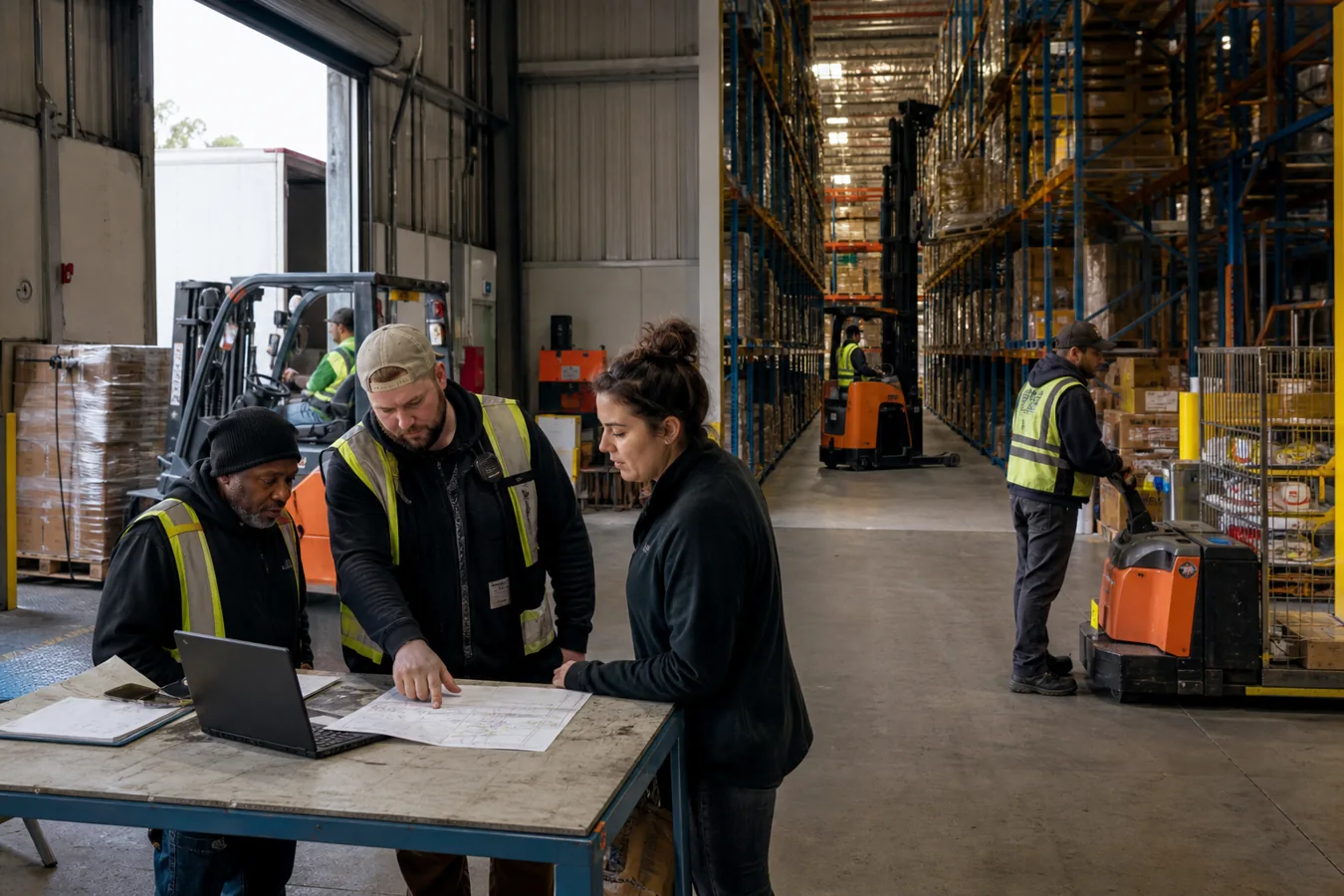
1. Define the real operating requirement
Write down the heaviest load, load center, maximum lift height, attachment, aisle and door clearance, floor or yard surface, emissions limits, shift length and expected annual hours. A nominal capacity rating does not guarantee the same capacity at height or with an attachment.
2. Match the forklift type to the environment
Counterbalance forklifts handle general dock and yard work. Reach trucks serve high racks and narrow aisles. Order pickers elevate operators for case and piece picking. Rough-terrain forklifts and telehandlers address outdoor surfaces and jobsite reach.
3. Choose electric, LPG, diesel or another power path
Electric forklifts support indoor operations when charging, battery runtime and power infrastructure fit the shift plan. LPG can bridge indoor and outdoor work where ventilation permits. Diesel commonly serves outdoor and high-demand applications. Compare energy, maintenance, emissions and downtime—not fuel price alone.
4. Decide whether to buy, rent or lease
Buy when utilization is predictable and the operation can support maintenance. Rent for seasonal peaks, projects or immediate gaps. Lease when predictable payments, newer equipment and a planned replacement cycle matter. Use the forklift financing guide to compare cash flow, term, ownership and end-of-term obligations.
5. Inspect used forklifts for sale
Verify model, serial number, hours and capacity plate. Inspect mast channels, chains, carriage, forks, hydraulics, steering, brakes, tires, safety devices and the battery or engine. Test under a representative load when possible. Ask what the dealer inspected, repaired and warrants in writing.
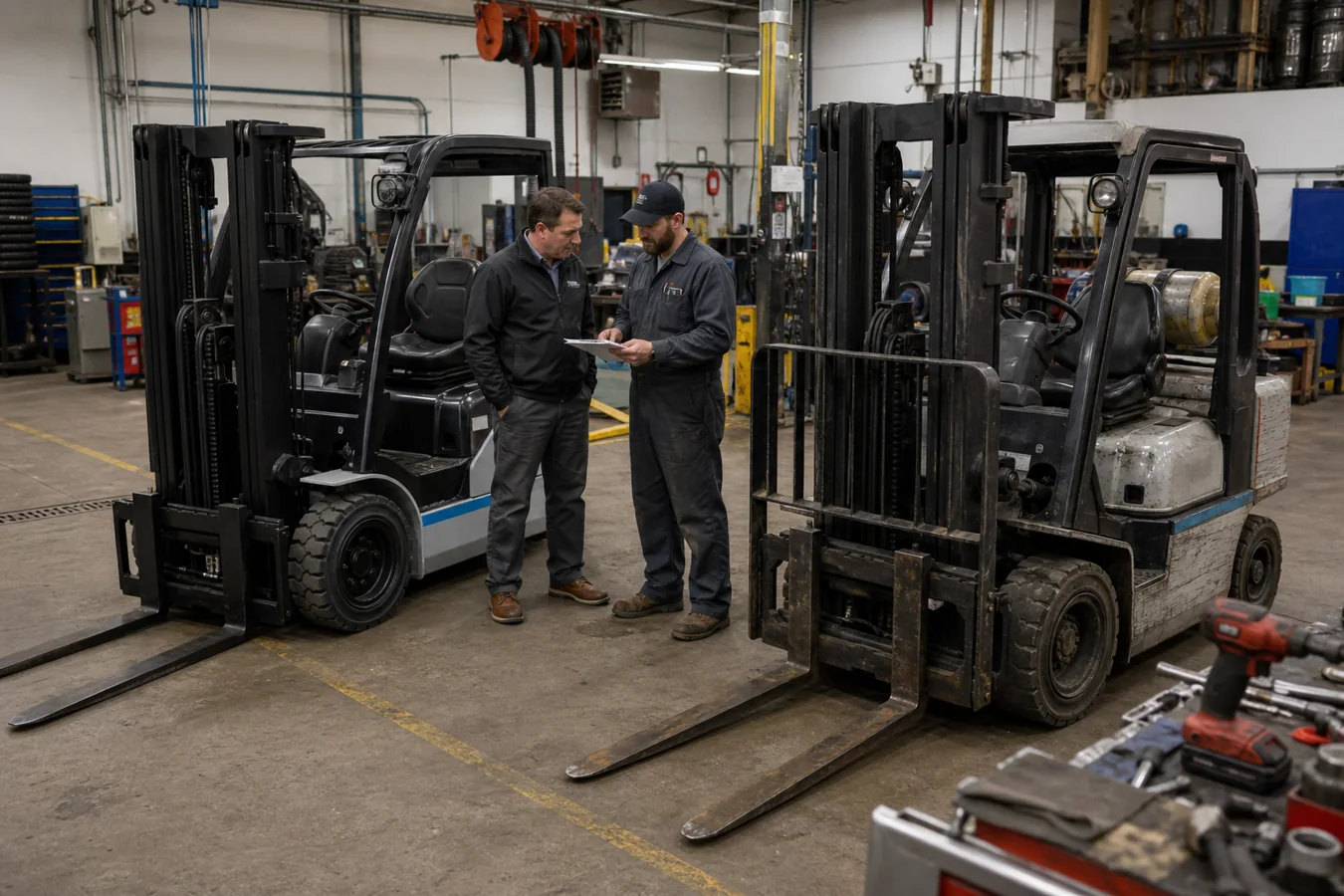
6. Compare the complete ownership cost
A useful forklift price quote identifies equipment, options, condition, warranty, freight and delivery. Add energy, planned maintenance, expected repairs, tires, batteries, attachments, operator training and downtime. A cheaper truck that cannot sustain the duty cycle is not a lower-cost choice.
7. Evaluate the dealer and support path
Ask who handles parts, routine service and emergency repairs in the delivery market. Confirm response expectations, technician coverage, parts availability and whether the seller or a local partner owns the support relationship. Browse forklift dealers by state to continue local planning.
Questions buyers should ask
- What capacity remains at the required lift height and load center?
- What condition and service documents are included?
- Who pays freight, unloading and commissioning?
- What warranty applies, and who performs the work locally?
- What training or familiarization is required before operation?
- What is the expected five-year cost at our annual hours?