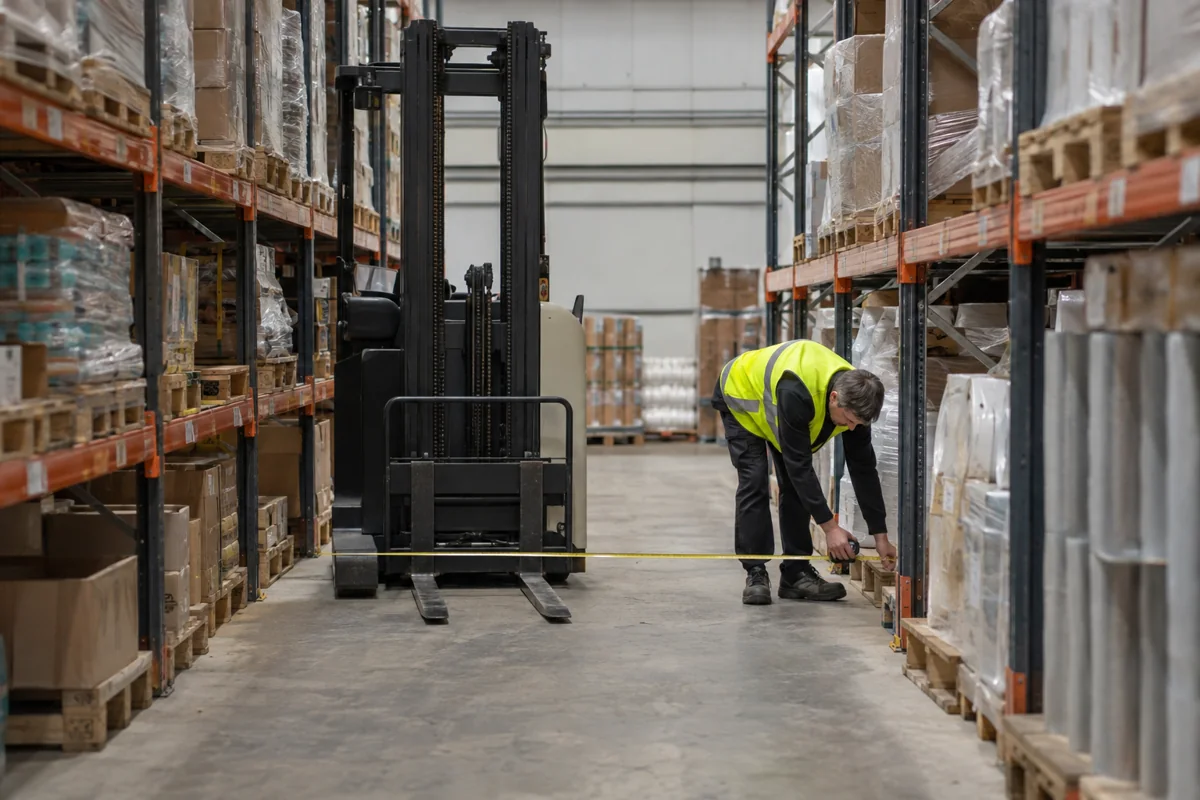
Adding another rack row can look like an easy storage gain until the forklift can’t turn with a pallet. Forklift aisle width requirements depend on the truck, load and maneuver. A general aisle measurement won’t establish whether a specific machine can safely serve your racks.
Ask the manufacturer or dealer for the right-angle stacking aisle requirement for the exact truck and your actual load dimensions. That figure is different from the width needed simply to drive straight through. Confirm the required operating clearance and any site-specific safety allowance.
Our forklift aisle width requirements page helps you compare equipment types. Don’t choose a truck from a generic width table without checking its configuration.
Record pallet length, width and overhang, including packaging that protrudes beyond the pallet. Measure between the closest real obstructions: rack guards, columns, stored goods and door frames. An aisle drawn as ten feet on a plan may be narrower where the work happens.
Include cross-aisles, staging areas and the route from the dock. Check door height, lowered mast height and the raised mast’s clearance near ceilings and services. The forklift buyer’s guide keeps those measurements connected to the buying specification.
Have your aisle measurements ready? Request warehouse forklift pricing with a rack plan and pallet dimensions so providers can check the fit.
Warehouse reach trucks can serve layouts that don’t suit a conventional counterbalance truck. OSHA’s narrow-aisle guidance discusses specialized equipment and safe stacking. The choice still depends on loads, heights and the complete travel route.
Compare capacity at the top rack, not just the headline rating. Ask whether the truck can handle your pallet entry direction and any unusual load. If dock work matters, confirm floor and transition suitability rather than assuming one truck will do everything.
Give the dealer a scaled rack plan and identify the busiest picking and replenishment periods. Consider pedestrian separation, visibility and where pallets wait. Have a qualified person assess the layout; a truck that physically fits can still create a poor working aisle.
Use our choosing a forklift FAQ to keep the decision tied to the job rather than storage density alone.
Yes. Attachments can change overall dimensions, load position and turning requirements. Get the stacking requirement for the fitted attachment and load, not the bare truck.
Confirm the replacement truck, capacity and handling plan first. Moving racks around an assumed specification risks paying twice to correct the layout.
If attachments are part of the plan, review the forklift attachments guide before requesting a final specification. Send measurements the dealer can verify, then choose the machine.

September 25,2026

September 22,2026

September 21,2026

September 18,2026


The largest network of forklift dealers in the US and Canada is at your fingertips. Get the best pricing nationwide now on renting or buying a forklift
Get the lowest prices from our forklift dealers near you.
