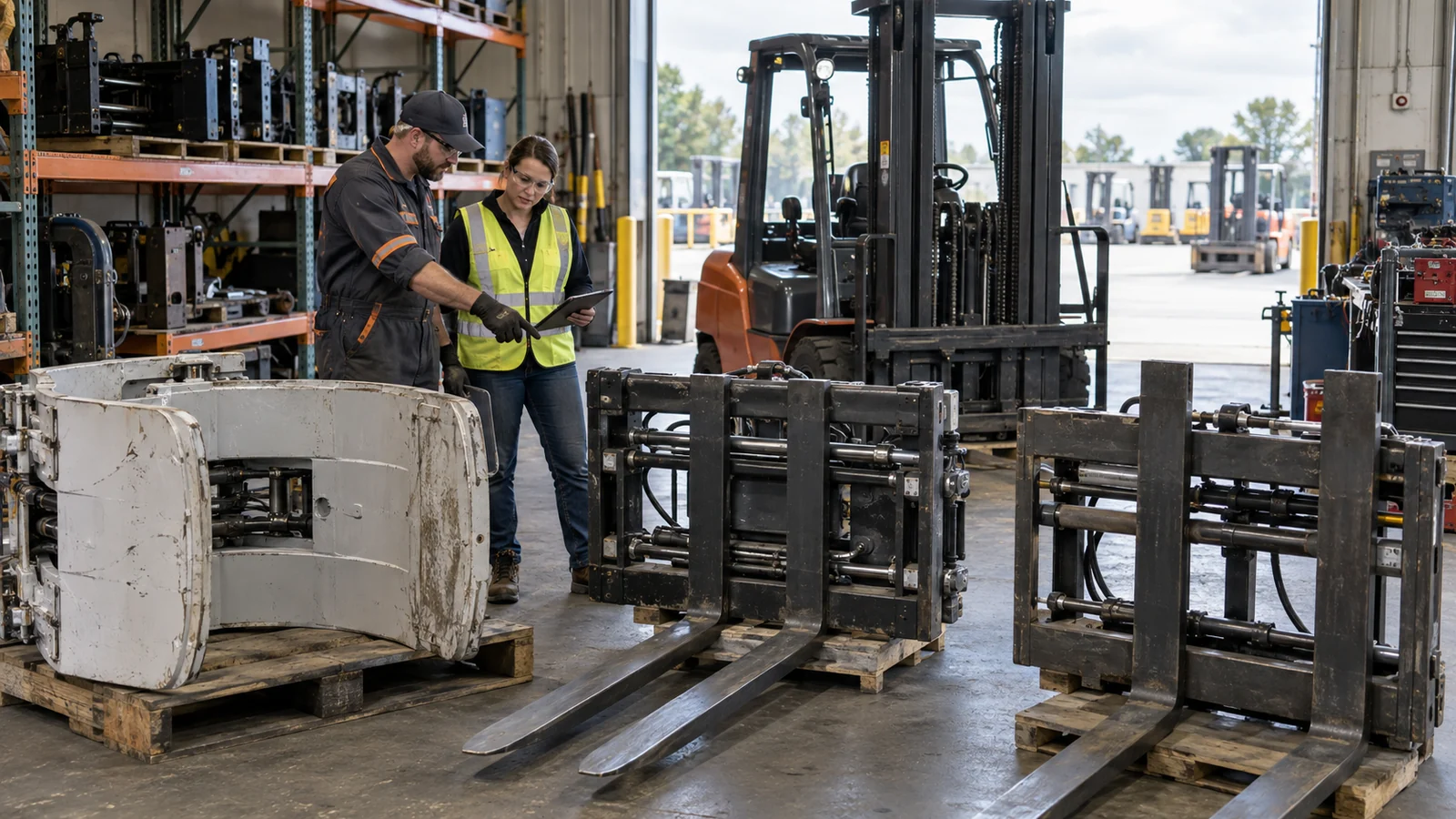
A forklift attachment can save handling steps, improve load control or let one truck serve a specialized task—but it can also change capacity, visibility, weight and hydraulic requirements. Buyers should price the attachment as part of the configured truck, not as an accessory added after the equipment decision.
Begin with the material: dimensions, weight, surface, stability and how it must be picked up, moved, rotated or released. Then confirm the truck, mast, carriage, hydraulics and data plate support that exact setup.
Use this forklift attachments guide to identify the function and price drivers before requesting a configured equipment comparison.
A sideshifter moves the forks left or right so the operator can align with a pallet or rack opening without repositioning the entire truck. It is common in warehouses and docks where precise placement matters. Verify travel, added thickness, weight, hydraulic connection and residual capacity.
A fork positioner changes the distance between forks hydraulically. It can reduce manual adjustment when pallet or load widths vary. Confirm the permitted load range, minimum and maximum fork spread, carriage compatibility and whether a sideshift function is combined.
Clamps apply controlled pressure around a load. The correct arm shape, surface, opening range and pressure setting depend on the product. Too little force can lose the load; too much can damage it. Ask how pressure is set, protected and verified for the intended material.
A rotator turns a load to dump, invert or reposition containers. It may be used in food, recycling, agriculture, manufacturing and other material flows. Rotation changes the handling sequence and can require additional hydraulic functions, guarding and operating space.
Push-pull systems can handle goods on slip sheets instead of conventional pallets. The value depends on product packaging, dock equipment, load stability and how consistently the supply chain uses compatible sheets. Price the complete process, not only the attachment.
Ask dealers to state what is included and whether the truck has been inspected and rated with the installed attachment. All States Industrial’s forklift selection guide helps connect attachment needs to the base machine.
An attachment adds weight and can move the load farther from the truck. That may reduce the capacity available at the required height and load center. Do not rely on the truck’s original headline rating. Require the configured capacity information and markings that apply to the installed attachment.
OSHA’s powered-industrial-truck standard addresses manufacturer approval and updated markings for modifications and additions that affect capacity or safe operation. Review the current 29 CFR 1910.178 requirements with the employer’s qualified safety resources and the equipment provider.
Added thickness, width and forward projection can change turning, stacking and rack clearance. Confirm visibility, hose routing, load backrest, overhead clearance and the operator’s ability to use the attachment through the complete work cycle. A short site demonstration can reveal conflicts that a specification sheet misses.
No. Capacity, carriage, hydraulics, dimensions and truck approval must match. Confirm compatibility for the specific truck and attachment.
It can. Attachment weight and the resulting load center may reduce residual capacity, especially at height. Use the configured rating and updated data plate.
A used unit may be practical when condition, compatibility, wear parts, records and support are verified. Include inspection and installation in the comparison.
Price the attachment, truck and load as one system. Compare available forklifts for sale and request a complete forklift price quote with the attachment and configured capacity included.


September 28,2026

September 25,2026

September 22,2026

September 21,2026

September 18,2026
The largest network of forklift dealers in the US and Canada is at your fingertips. Get the best pricing nationwide now on renting or buying a forklift
Get the lowest prices from our forklift dealers near you.
