
Forklift buyer resources
Question answered: What forklift clearance do shipping containers need?
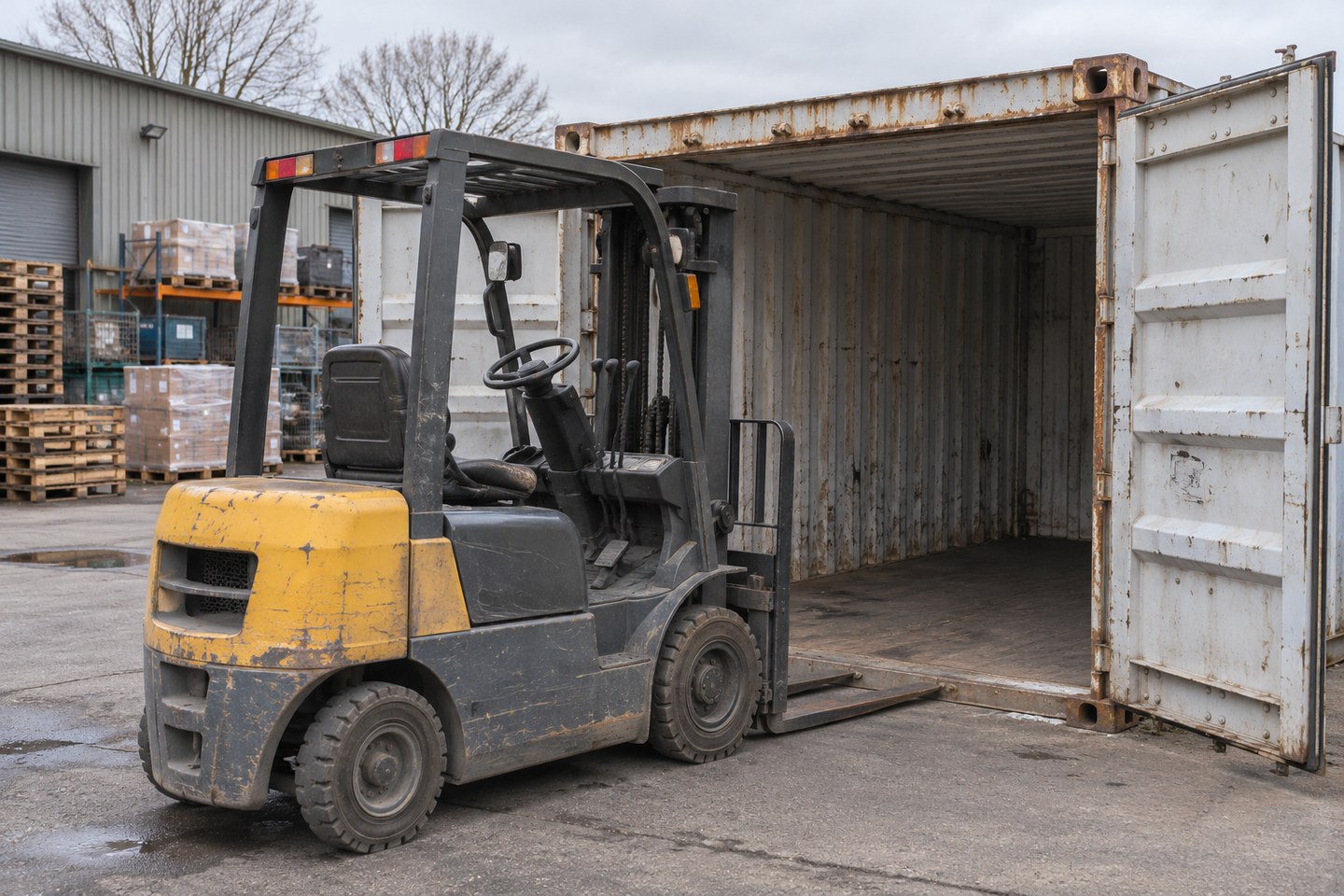
A forklift can have enough lifting capacity for your pallets and still be the wrong truck for a shipping container. The trouble is usually somewhere less obvious: the lowered mast catches the doorway, the load cannot be raised far enough inside, or the route into the container has never been assessed for the combined truck and load weight. When comparing forklift prices, give the dealer the container-loading task as well as the pallet weight.
Start by deciding what the forklift actually needs to do. Delivering a pallet to the entrance of a ground-level storage container is different from driving through it. Loading a container sitting on a chassis is another job again. The equipment, access arrangement and checks should follow that decision. A photograph of a similar warehouse is not enough to specify the truck.
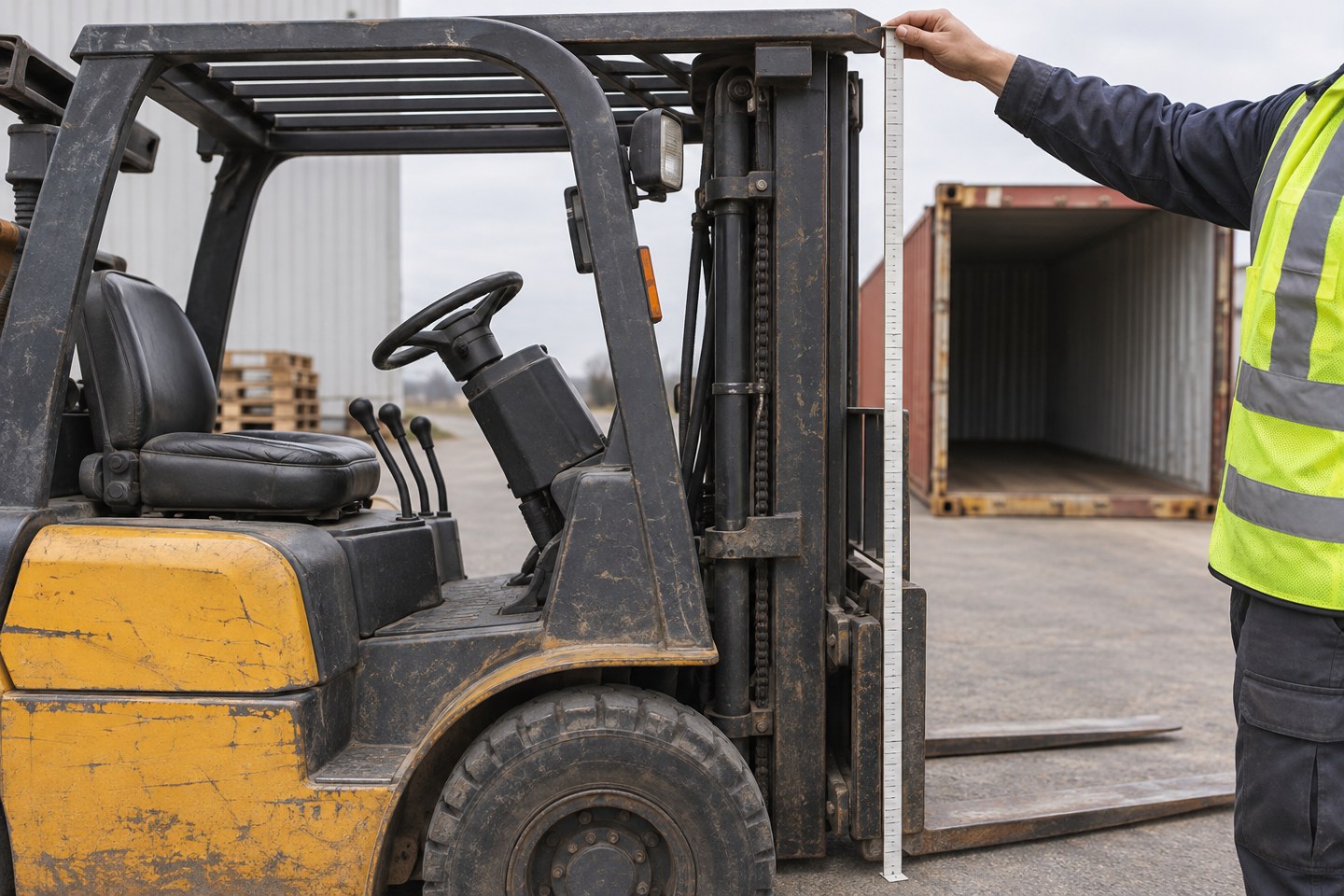
Measure the usable doorway on the actual container. Then ask for the forklift’s overall lowered height, overhead-guard height, mast height, free lift and turning requirements in the exact configuration being offered. A brochure’s maximum lift height tells you very little about whether the truck will work under a low roof.
Free lift is how far the forks can rise without increasing the truck’s lowered overall height. The carriage or load backrest can reach above the mast before the inner rails extend, so have the dealer confirm the actual overhead envelope. Toyota’s free lift explanation is a useful reference when discussing those specifications. That matters when the load needs to clear an obstruction inside a height-restricted space. But free lift alone does not settle the question. The load itself needs headroom, and a mast that clears the entrance while lowered may not clear the roof during the intended movement. Ask the dealer to walk through the complete lift, with the pallet dimensions included.
Our forklift mast guide explains the specification questions to resolve. Use the forklift types comparison and ask the supplying dealer for the dimensions of the actual truck, not a different machine in the same model family.
Width deserves the same attention. A truck may fit through an opening but leave no sensible operating clearance around an uneven pallet. Long or wide loads change turning space and load center. Attachments change the truck’s available capacity too. Compare the proposed configuration’s capacity plate and manufacturer information rather than assuming a familiar nominal capacity covers every load.
This is the part worth settling before anyone orders equipment. A ground-level storage container is not automatically a forklift-rated loading area. A container’s general payload figure does not, on its own, establish that a particular floor can take the concentrated wheel loads of your forklift. Used floors may also have damage, repairs or contamination that a photograph does not reveal.
If entry is proposed, the container supplier and equipment supplier need the truck’s operating weight, maximum intended load, wheel loading information and the planned access arrangement. The responsible site team should confirm the floor condition and suitability. A pallet jack can reduce some equipment requirements, but it still needs a suitable surface, adequate capacity and a safe route. It is not a universal workaround.
A container on a trailer or chassis adds vehicle-movement and support questions. OSHA’s powered industrial truck standard addresses matters including checking trailer flooring before driving onto it and preventing movement during loading. The applicable precautions depend on the actual arrangement. Do not improvise a bridge from loose timber or assume an unverified ramp is suitable.
There is often a simpler specification available: keep the forklift outside and use an appropriate, assessed method for moving goods from the threshold. That choice should follow the goods, distances, handling frequency and site conditions. It should not be made after the container has arrived and the first delivery is waiting.
It is easy to compare trucks for several days and treat the container as a box that will sort itself out. In practice, its position and door arrangement may decide how useful the forklift will be. Where will the doors open? Can they stay secured out of the route? Is there space to approach squarely, or will the operator have to make a tight turn immediately before the opening?
For the container side of that comparison, our related company harpersteel.com provides information on storage-container sizes, condition and delivery options. Those questions sit alongside the forklift specification: confirm the exact unit, doorway, floor condition and placement arrangement with the suppliers before treating it as a loading solution. The two purchases should fit the same workflow.
Consider a business storing boxed stock that is collected a few times a week. It may need a clear unloading point and a suitable internal handling method more than a truck that drives deep into the container. A busier operation handling full pallets throughout a shift has a different problem. Neither example tells you which truck to buy; they show why handling frequency belongs in the inquiry.
A useful dealer request includes pallet weight and dimensions, attachment needs, the actual doorway measurements, the approach surface, the loading height and whether the truck is expected to enter. Include photographs and a simple measured sketch. Ask what would change if the container is relocated or the operation moves from occasional storage to daily receiving.
Use our forklift selection guide to check the broader specification. If a used truck is in the comparison, review its condition and service records through the used forklift checklist. A lower purchase price is not much help if the mast configuration or repair needs make it unsuitable for the job.
Finally, compare the truck, any approved attachments, the access equipment and the site work as separate priced items. You want to know what is included and who is confirming compatibility. Send the same loading requirements to each supplier, then compare forklift prices against the job the machine will actually do.


November 19,2026

November 16,2026

November 9,2026

November 5,2026

The largest network of forklift dealers in the US and Canada is at your fingertips. Get the best pricing nationwide now on renting or buying a forklift
Get the lowest prices from our forklift dealers near you.