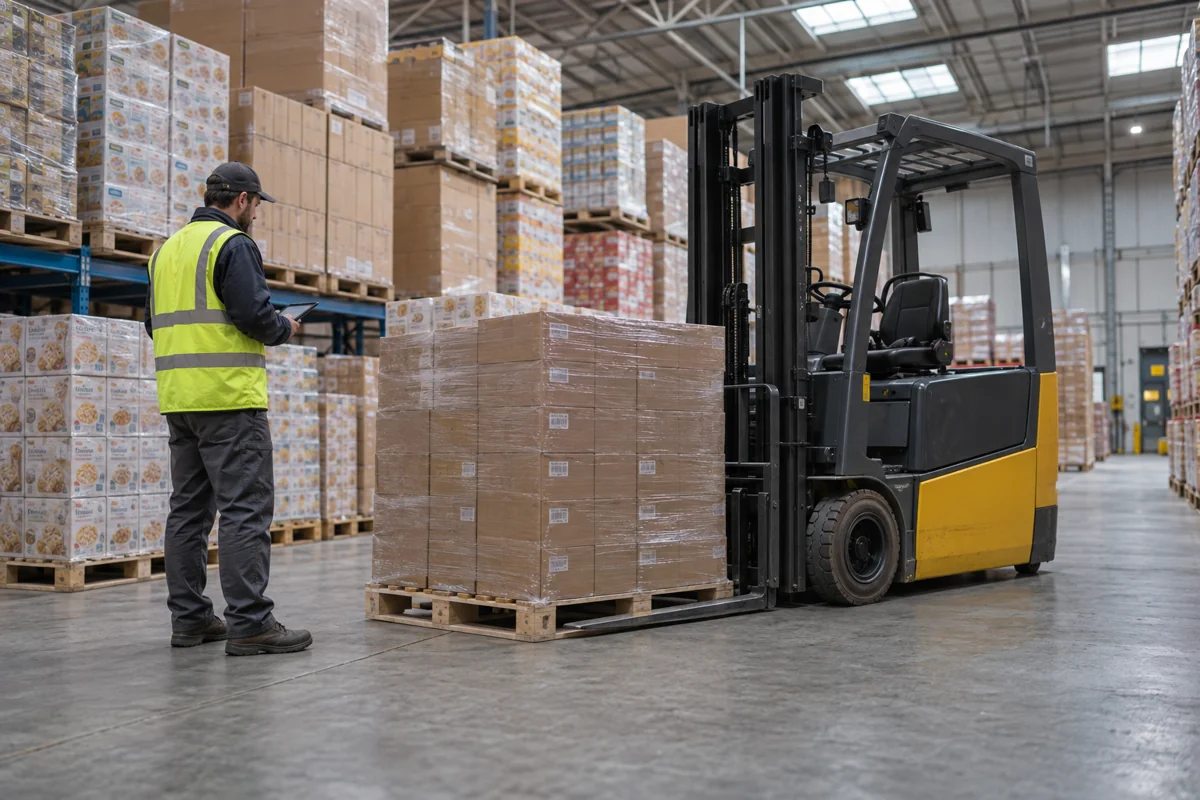
A pallet of bottled drinks can weigh far more than a pallet of boxed snacks, even when both occupy the same floor space. That difference matters before you choose a truck for a food warehouse. Start with the heaviest regular load, its dimensions and its destination—not the average pallet shown on a sales sheet.
When comparing forklifts for food and beverage warehouses, give suppliers a short load-and-route brief. Include full beverage pallets, mixed cases, damaged-pallet handling and any movement between receiving, storage and dispatch. Ask for the proposed truck’s capacity at your actual load center and highest required lift.
There’s no single answer for every building. An electric counterbalance truck may suit receiving and floor-level pallet movement. A warehouse reach truck may better match tall rack storage where aisle measurements support it. Check whether one machine can safely cover both jobs before buying a fleet around that assumption.
For packaged products handled indoors, electric forklift benefits include the absence of engine exhaust at the truck. That doesn’t make every electric model suitable for washdown, condensation or freezer work. Get written confirmation of the operating environment, cleaning method and temperature range.
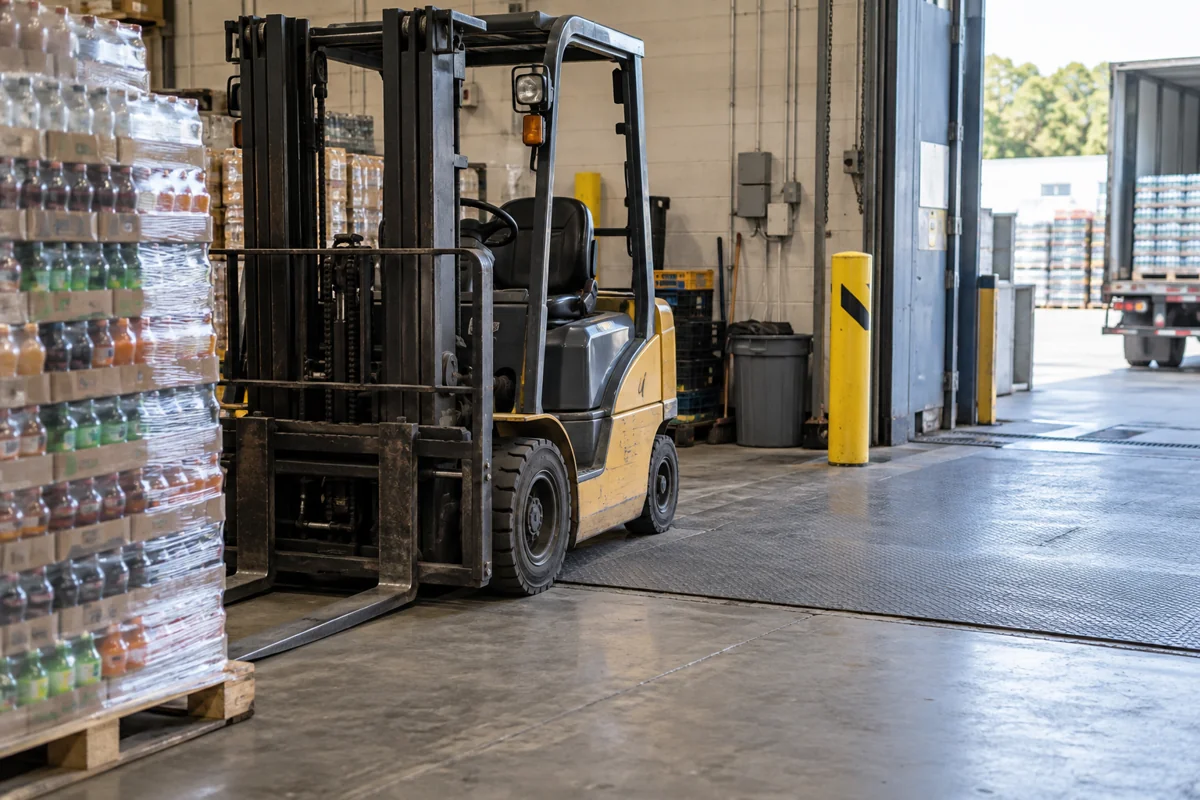
Measure the tightest turn with the load in place. Note door widths, rack clearances, dock slopes and floor transitions. Stretch-wrapped bottles can obscure the operator’s view, while an uneven pallet may shift the load forward. A supplier demonstration should use a representative pallet and the proposed forks or attachment.
Use the same brief when requesting forklift price quotes. Otherwise, a cheaper offer may cover a different battery, charger, tire specification or capacity configuration. Our forklift selection guide helps organize those comparisons.
One truck may cover both, but temperature changes and moisture can affect equipment suitability. Describe how often the truck crosses between environments, how long it stays in each and whether cleaning involves spraying water. Ask the supplier to confirm the configuration for that duty rather than relying on a general “cold-storage ready” label.
What should a food warehouse include in its forklift budget?
Include the truck, approved attachments, battery and charger, electrical preparation, planned servicing and replacement coverage during downtime. Compare forklift financing against those complete costs. Keep the heaviest beverage pallet at the center of the comparison. It’s the load the truck must handle, even if lighter cartons make up most of the day.
The largest network of forklift dealers in the US and Canada is at your fingertips. Get the best pricing nationwide now on renting or buying a forklift
Get the lowest prices from our forklift dealers near you.


